Let's start with what actually changes
Honestly, the thing nobody tells you about arousal in your 40s and 50s is that it doesn't disappear. It just gets slower. And if you're expecting it to work the same way it did at 25, you'll spend years thinking something's wrong with you when really, your body has just shifted its timeline.
I've worked with hundreds of people navigating this exact transition. The pattern is always the same: they notice arousal takes longer to build, they panic, they blame themselves or their partner, and they either give up or they push harder (which usually backfires). The thing that actually helps is understanding why it happens, then working with your body's new rhythm instead of against it.
Here's the physiology. As estrogen levels decline in midlife, blood flow to the clitoris and vaginal tissue slows slightly. Nerve sensitivity doesn't disappear, but the chain reaction that used to fire in five minutes now takes 15 or 20. That's not broken. That's just biology.
Why slower arousal isn't a sign of lower desire
This is the crucial bit. Slow arousal and low desire are completely different things. One is timing. The other is interest. You can have zero desire for your partner and still arouse quickly at 25. You can be deeply attracted to someone at 50 and need 20 minutes of foreplay to get fully aroused. These aren't connected the way our culture pretends they are.
What I see happening is that people mistake the timeline shift for a desire problem, so they either panic ("Am I losing interest?") or their partner panics ("Are you still attracted to me?") and suddenly you're having a conversation about the relationship when the real conversation is just about tempo. You're not broken. You're not losing desire. Your body just has a new dial.
Here's what else changes: once arousal does build, it often builds more evenly. There's less of that sharp spike-and-crash you might have experienced younger. Many people find their orgasms feel more full-bodied, less focused on a single moment and more like a sustained experience. That's a feature, not a downgrade.
How a lemon vibrator handles slow-building arousal better
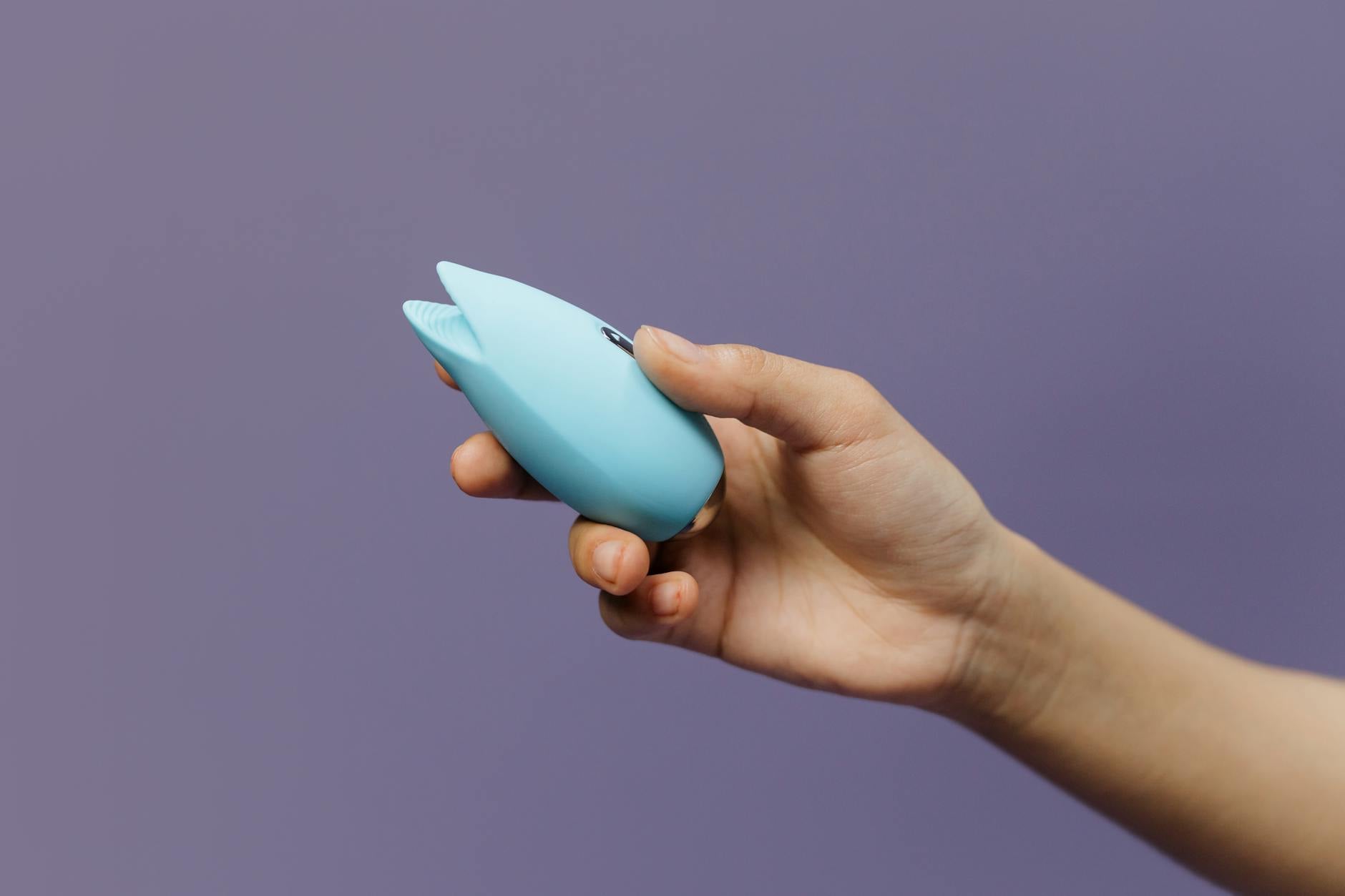
The reason a lemon clitoral vibrator works so well for this specific scenario is that it doesn't rely on speed or intensity alone. Air-suction technology (which is what defines the lem vibrator and similar lemon sucker devices) works by stimulating nerve endings through gentle pressure changes rather than direct friction.
This matters because it means you can start at a low setting and stay there. You're not stuck choosing between "barely feel anything" and "way too much." You can literally camp out at pattern 1 or 2 for 15 minutes while you're building arousal, then shift up as sensation intensifies. You're not fighting your timeline. You're flowing with it.
Conventional vibrators often work backward for this scenario. They come in two modes: gentle-but-barely-there or ramps-up-fast. When arousal is slow, you need something that can provide consistent, buildable sensation without requiring you to jump straight to high intensity. A quality lemon clitoral vibrator does that naturally.
The mental piece that matters as much as the physical one
Here's something that's less talked about but honestly more important: slow arousal gives your brain time to catch up. In your 20s and 30s, your body would often arouse before your mind was fully in the room. Now, that 15-minute buildup isn't a frustration. It's actually an opportunity for your brain to sync with your body.
That changes everything about the experience. You're not fighting distraction and then suddenly getting aroused. You're gradually shifting your focus from your to-do list to sensation, and by the time your body is fully responsive, your mind is fully there too. That's not slower. That's deeper.
Many people I work with find that this longer warm-up actually improves their orgasms because there's less mental friction. You're not performative. You're not rushing. You're just...present.
Building a routine that works with your timeline
If you're partnered, the conversation worth having is simple: "I need about 20 minutes of foreplay now instead of 5. That's not a complaint about you. It's just how my body works. Want to try something different together?" Most partners are relieved to know the issue has a name and a solution.
If you're solo, the luxury is yours. You can take your time. You can spend 20 minutes just using a lemon vibrator at lower settings while you're reading, thinking about something that turns you on, or just getting into your body. The Lem's intuitive settings make this easy. You're not managing anything complicated. You're just existing in the sensation.
One thing I often suggest: use water-based lubricant, even if you're producing enough on your own. Not because anything's wrong, but because it makes every sensation clearer. Thinner tissue is more sensitive to friction, so lube reduces any sensation that might feel sharp and lets you feel the fullness of the suction instead.
When slow arousal is actually about something else
Slow arousal in midlife is normal. Completely absent arousal is different. If your desire has completely flatlined and isn't returning after you've given yourself time to adjust, that's worth checking in about. Sometimes it's hormonal. Sometimes it's medication. Sometimes it's relationship stuff or mental health stuff that has nothing to do with aging.
A good doctor can help. So can a therapist. What's not helpful is assuming because arousal is slower that something's fundamentally wrong. In most cases, slow arousal is just slow arousal. It's an adjustment, not a diagnosis.
The unexpected benefit of the long warm-up
Here's what I hear from people once they stop fighting the slower timeline: they actually enjoy foreplay more. When you're not stressed about how long it's taking, when you're not watching the clock, when you're not trying to make your body do something it's not ready for, foreplay becomes the whole experience instead of the preamble.
The lemon clitoral vibrator works perfectly in this context because it's discrete enough to use during partnered foreplay (a suction toy feels less intrusive than a traditional vibrator for many couples), and it's sophisticated enough that you're not relying on your partner to do all the work. You can take turns. You can use it together. You can use it solo while they touch you elsewhere. The options expand.
The other thing: the Lem and similar lemon sucker devices are genuinely quiet compared to other toys. That might sound minor, but it means you can focus on sensation without the buzz drowning out intimacy or partnership. You can hear your partner. You can talk. You can be present.
What actually helps when you're starting this journey
If you're new to using a lemon vibrator specifically for slow-building arousal, start at the lowest setting and give yourself permission to stay there. Don't jump to higher patterns because you think you "should" be aroused faster. Notice what happens when you just let sensation build over time.
Pay attention to what time of day works best. Some people find morning arousal is slower but deeper. Others find evening works better. There's no rule. Just experiment.
If you're partnered, talk about what turns you on now, not what turned you on 20 years ago. That's not sad. That's growth. You might find that specific touch, specific words, or specific scenarios do more to shorten your arousal timeline than anything physical. Arousal is never purely physical, especially as you age.
And honestly? Give yourself a year of adjustment before you decide something's wrong. Your body doesn't pivot overnight. It takes time to understand the new rhythm and actually enjoy it instead of resisting it.
FAQ: Lemon Vibrators and Slow-Building Arousal
Is slow arousal a sign of low libido?
Not even close. Arousal speed and desire are different systems. You can want your partner or yourself desperately and still take 20 minutes to physically arouse. The timeline has changed, but the interest hasn't. If you're confused about what you actually want, that's a different conversation. But slow arousal by itself just means slower arousal.
Can a lemon vibrator actually speed things up?
Not by itself. What it does is make the buildup feel better, so you're not frustrated or performative while you're waiting. A lemon clitoral vibrator provides consistent, buildable sensation that doesn't require you to jump straight to high intensity. You can start gently and stay in that sweet spot while your body gradually intensifies. That changes the whole experience from "why is this taking so long" to "this feels really good."
How long should foreplay actually take now?
There's no "should." But most people find that what used to take 5 minutes now takes 15 to 25. Some take longer. Some find they can shorten it once they're in a rhythm and know what works. The key is not treating it as a problem to solve but as part of the actual experience. Foreplay is sex now, not the opening act.
Does medication make slow arousal worse?
Yes. Antidepressants, blood pressure meds, antihistamines, and a bunch of others can slow arousal or make sensation feel duller. If you started a new med and your arousal shifted, mention it to your doctor. There might be alternatives. But don't just stop taking something. Work with your prescriber.
Will slower arousal always mean longer sessions?
Not necessarily. Once your body learns the new rhythm, the buildup might happen faster than it initially did, even if it's still slower than it was at 25. You're not stuck in slow motion forever. You're just in a new baseline that might shift again over time.
Is a lemon vibrator or clitoral vibrator better for this than other toys?
It depends on what feels good to you. But suction-based toys like the Lem have a specific advantage: they provide consistent, graduated stimulation that doesn't depend on speed or intensity alone. You can literally stay at a low setting indefinitely. With traditional vibrators, you're often choosing between too gentle and too much. With a lemon sucker, there's more room in the middle.